



Performers
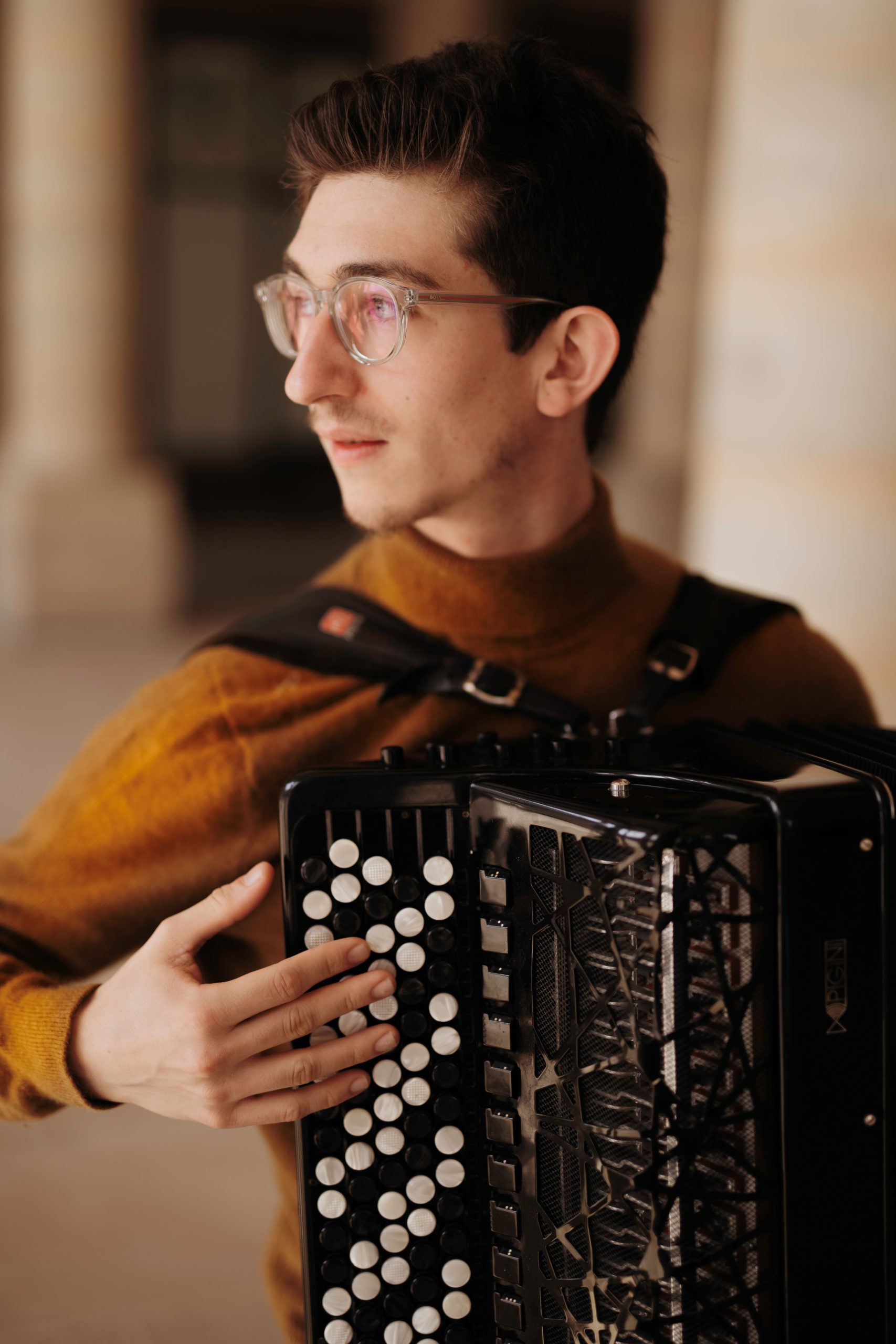
- Julien Beautemps accordion
Programme
Wolfgang Amadeus Mozart Requiem (selection, arr. Julien Beautemps) [16’]
Introit
Kyrie
Dies irae
Lacrimosa
Domine Jesu Christe
Victor Vlasov Vesnyanka (Веснянка) [5‘]
Julien Beautemps Sonata No. 1 Inferno (Polish premiere) [25’]
I. Praeludium aeternum
II. Inferno
III. Pater noster
Concert description
“I love arrangers more than anyone else” – these words by Peter Szendy can cheer up any instrumentalist and composer who likes to play and perhaps prepare their own transcriptions, especially in moments when they lose faith in their necessity in the age of music available at every click. Maybe it is precisely because we no longer need arrangements to get to know pieces (as was the case before the advent of recording technology) that we are better able to appreciate their independent artistic value? Besides, although accordionists have a very rich repertoire of pieces written for their instrument, the earliest of these date back only to the 19th century. And how can we give up playing Bach or Mozart? For listeners, on the other hand, arrangements give an insight into how others hear the pieces they know – without the mediation of words. Julien Beautemps, a 25-year-old musician who has already won several awards, set himself a real challenge – to translate selected parts of the Requiem in D minor for the accordion. His response to Mozart’s masterpiece is also his Sonata “Inferno,” performed for the first time in Poland, in which “echoes of choirs and contemplative soundscapes appear one after another, and the effects have been chosen to showcase the amazing possibilities of the concert accordion.” In this piece, Beautemps reveals “his dual identity as a performer and composer, with spiritual heritage intertwined with colorful imagination.” A surprising interlude will be the folk-inspired Vesnyanka, also by composer and accordionist Wiktor Własow.
– Dominika Micał (pisanezesluchu.pl)
Julien Beautemps – Sonata No. 1 Inferno
Ten orkiestrowy fresk to kombinacja trzech części inspirowanych religią. Echa chórów i kontemplacyjne pejzaże dźwiękowe następują po sobie – w zestawieniu efektów, które wykorzystują zadziwiające możliwości akordeonu koncertowego. Pozwala mi to zademonstrować moją podwójną tożsamość jako interpretatora i kompozytora – w nowym utworze, który łączy duchowe dziedzictwo i barwną wyobraźnię.
– Julien Beautemps